#276 — Chemical Smoke Screen Machine
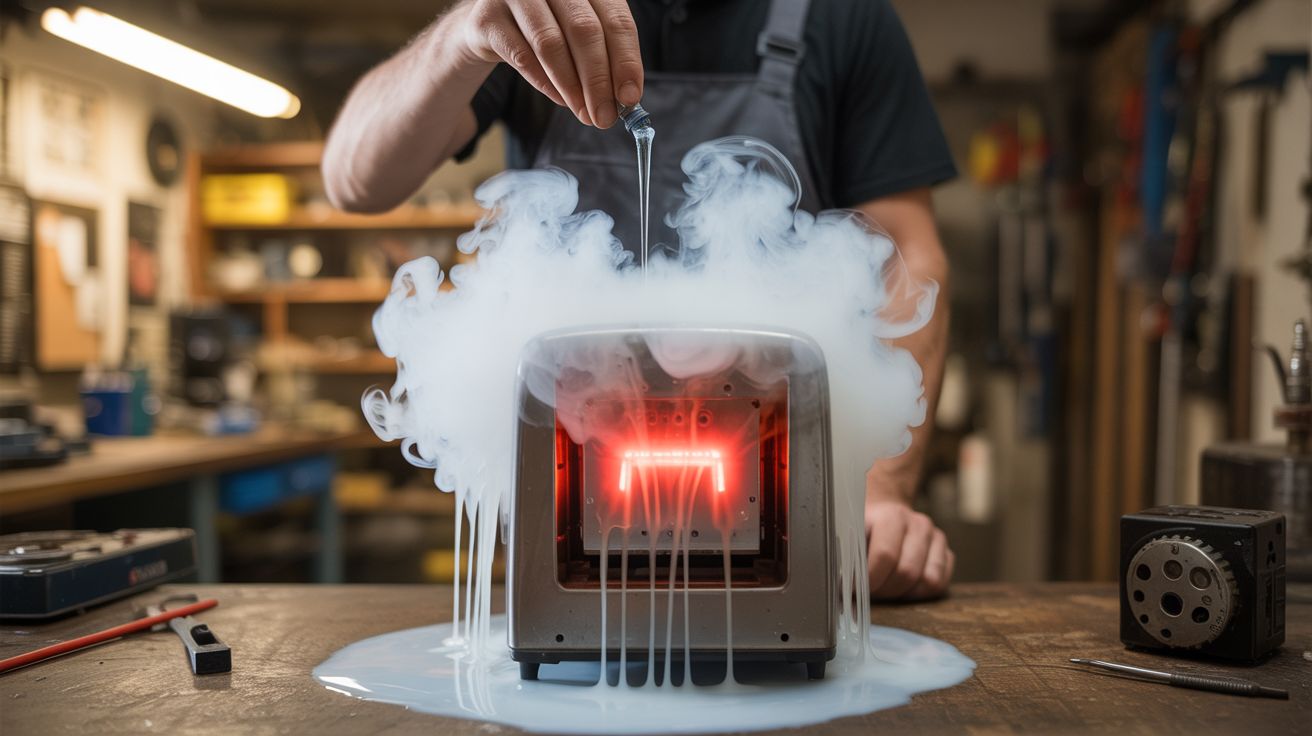
Drip glycerin onto a red-hot toaster element and disappear behind a wall of dense white smoke like a budget action movie villain.
Ratings



🧪 What Is It?
Military smoke screens have been used since ancient times — from burning wet straw to modern hexachloroethane smoke pots. But you don’t need military-grade chemistry to produce an absolutely ridiculous amount of smoke. All you need is glycerin (the same stuff in soap and vape juice) and a surface hot enough to flash-vaporize it. When glycerin hits a surface above 300°C, it decomposes into acrolein vapor and water, which immediately condenses into a thick, white, opaque aerosol. The result is dense theatrical fog that hugs the ground and obscures everything behind it.
The build is dead simple. Gut a toaster for its nichrome heating element and mount it in a metal enclosure — a coffee can works great. Wire the element to a variac or lamp dimmer for temperature control. Above the element, mount a small container with a needle valve or pinhole at the bottom that drip-feeds glycerin onto the hot surface. When the glycerin hits the element, it instantly vaporizes and pours out of the can as thick white smoke. A small PC fan on the outlet side directs the smoke where you want it. One tablespoon of glycerin produces enough smoke to fill a two-car garage.
The key to good smoke is temperature control. Too cool and the glycerin just pools and bubbles. Too hot and it burns off without producing much visible aerosol. The sweet spot is a dull red glow on the element — around 350-400°C. A dimmer switch lets you dial it in perfectly. Once you find the right setting, this thing is a smoke factory. Airsoft fields, Halloween setups, film projects, or just freaking out your neighbors — the applications are endless.
🧰 Ingredients
- Toaster — for the nichrome heating element (thrift store or junkyard, ~$2)
- Vegetable glycerin — food grade, available in bulk (pharmacy or online, ~$8 per quart)
- Metal can — coffee can or paint can for the smoke chamber (recycling bin, free)
- Lamp dimmer or variac — for temperature control (hardware store, ~$8-15)
- Small PC fan — 80mm or 120mm, 12V (dead computer, free)
- 12V power supply — wall wart or old laptop charger (junk drawer, free)
- IV drip bag or small plastic bottle — for the glycerin reservoir (medical supply or DIY, ~$3)
- Needle valve or adjustable clamp — to control drip rate (hardware store, ~$4)
- Flexible tubing — silicone, 1/4" ID, for glycerin feed line (hardware store, ~$3)
- Wire nuts and 14-gauge wire — for electrical connections (hardware store, ~$3)
🔨 Build Steps
-
Harvest the heating element. Disassemble the toaster and remove one or both nichrome heating elements. You want the flat ribbon-style elements, not the round wire coils (though both work). Straighten the element and coil it loosely into a flat spiral that fits inside your metal can. Leave the wire leads long enough to exit the can.
-
Build the smoke chamber. Cut a 2-inch exhaust hole near the bottom of the metal can. Mount the heating element inside on ceramic standoffs or bolts with ceramic spacers — the element must not touch the can walls. Route the power leads out through insulated grommets.
-
Install the drip system. Mount the glycerin reservoir (plastic bottle or IV bag) above the can. Run silicone tubing from the bottom of the reservoir through the needle valve and into the can, positioned so the drip lands directly on the center of the heating element. Adjust the needle valve to achieve roughly 1 drip per second as a starting point.
-
Wire the temperature control. Connect the heating element through the lamp dimmer to a mains plug. The dimmer lets you adjust power to the element from zero to full. Start at about 60% power and adjust based on smoke output. You want the element glowing a dull red — visible in a dim room but not bright orange.
-
Add the output fan. Mount the PC fan over the exhaust hole on the outside of the can. Wire it to the 12V supply. The fan pushes smoke out and away from the machine. Without the fan, smoke just lazily pours out and pools around the base of the unit.
-
Seal the gaps. Use aluminum tape or high-temp silicone to seal any gaps in the can except the exhaust port. You want all the smoke going out through the fan, not leaking from seams. Leave a small air intake hole (1 inch) on the opposite side from the exhaust to maintain airflow.
-
Test and tune. Power on the heating element at 60% and let it heat up for 2 minutes. Open the needle valve to start the glycerin drip. You should see thick white smoke within seconds. Adjust the dimmer and drip rate to maximize smoke density. Too much glycerin drowns the element; too little produces thin wisps. The sweet spot is a continuous, dense pour of white smoke.
⚠️ Safety Notes
Spicy Level 3 build. Read the Safety Guide and Chemical Safety, Fire & Pyro Safety before starting.
- The heating element operates at mains voltage and reaches 400°C+. Do not touch the element or the inside of the can during operation. Allow 10 minutes to cool after use. Keep the power cord away from the hot surfaces.
- Glycerin vapor in high concentrations is an irritant. Use this outdoors or in very well-ventilated spaces. Do not use in enclosed spaces where people will be breathing the smoke for extended periods.
- Overheating glycerin produces acrolein, which is a toxic irritant at high concentrations. If the smoke smells sharp and acrid instead of mild and sweet, your element is too hot — turn down the dimmer.
- Keep a fire extinguisher nearby. The glycerin itself is not very flammable, but the hot element can ignite other materials if they fall onto it.