#068 — RAM Stick Ruler
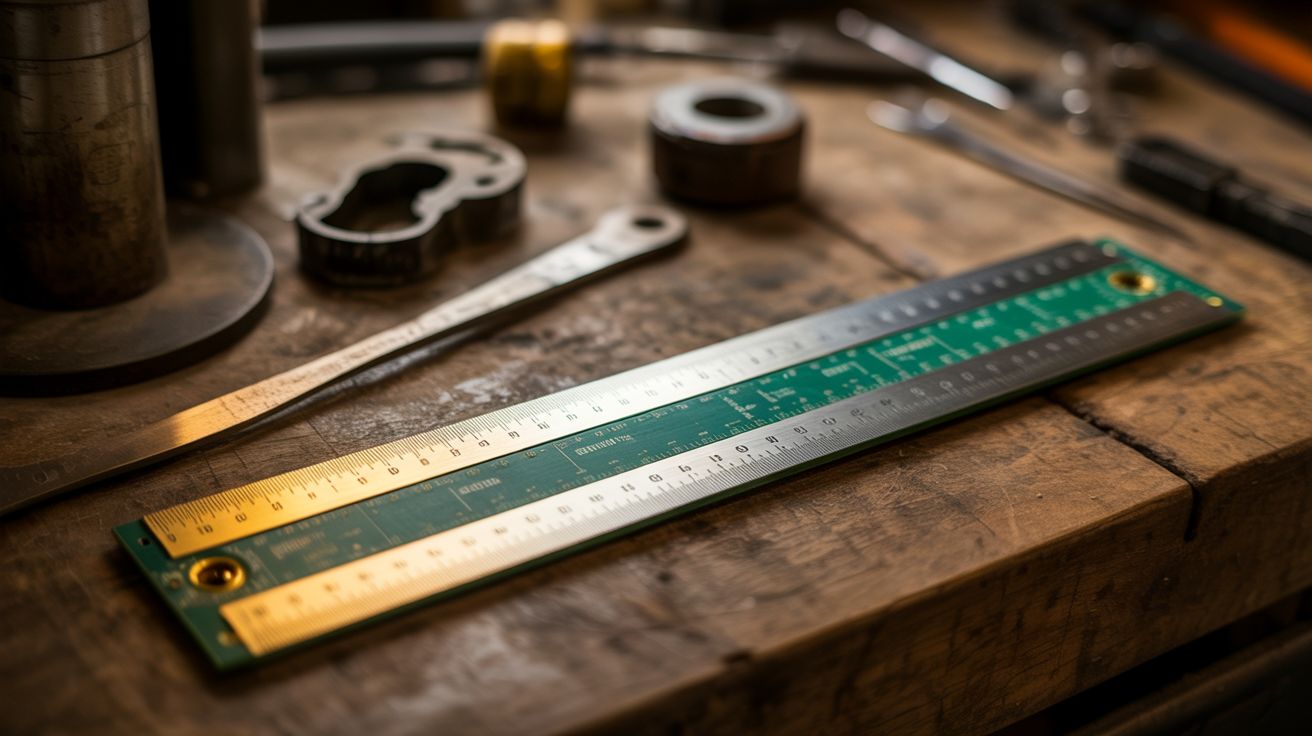
RAM sticks are perfectly straight, rigid PCBs with precise dimensions. They make genuinely good rulers. The gold contacts look cool.
Ratings


🧪 What Is It?
This is the simplest build in the entire book, and it's also the most satisfying in a "why didn't I think of this" way. Desktop DDR RAM sticks are precision-manufactured fiberglass PCBs with perfectly straight edges, consistent width, and exact length. A standard DIMM is 133.35mm long — mark millimeter lines along the edge and you have a ruler that's straighter than most cheap rulers from the store. The gold-plated contact fingers along the bottom edge look incredible, and the rows of memory chips give it a cyberpunk aesthetic that no office supply store can match. It's genuinely useful and it's a conversation piece.
🧰 Ingredients
- Dead DDR RAM stick — desktop DIMM preferred for length, laptop SO-DIMM works for a shorter ruler (e-waste bin, dead PCs)
- Fine-point permanent marker or paint pen — for marking measurements (office supply store)
- Actual ruler or calipers — for marking accurate measurements on the RAM stick (workshop)
- Optional: clear coat spray — to protect your markings (hardware store)
- Optional: small file — to smooth any rough edges on the PCB (hardware store)
🔨 Build Steps
- Select your RAM stick. Desktop DIMMs (DDR2, DDR3, DDR4) are all the same length: 133.35mm. Pick one with a visually interesting layout — green PCBs with black chips are classic, but black PCBs with gold heatspreaders look premium.
- Clean the stick. Wipe down with isopropyl alcohol to remove dust, fingerprints, and any residue. Let it dry completely.
- Check the edges. Run your finger along both long edges. PCB edges from manufacturing are usually smooth, but if there are any rough spots or burrs, lightly file them smooth.
- Mark the measurements. Using a verified ruler or calipers as reference, mark millimeter lines along one long edge with a fine-point permanent marker or paint pen. Mark every 10mm (centimeter) with a longer line and a number. The gold contact edge makes a natural "zero" end.
- Add inch markings (optional). On the opposite long edge, mark inch subdivisions if you want a dual-scale ruler. 133.35mm = about 5.25 inches.
- Seal the markings. Spray a thin coat of clear lacquer over the marked edge to prevent the marker from rubbing off with use. Let it dry fully before handling.
- Use it. Keep it on your desk, in your pencil cup, or in your workshop. It draws straight lines, measures small objects, and sparks conversations. It's also an excellent letter opener.
⚠️ Safety Notes
- Older RAM sticks may contain lead solder. Wash hands after handling, especially before eating. This is a low-risk concern for occasional use but worth noting.
- PCB edges can have microscopic fiberglass splinters. If an edge feels rough, file it smooth before using the stick regularly.