#003 — Propane Vortex Cannon
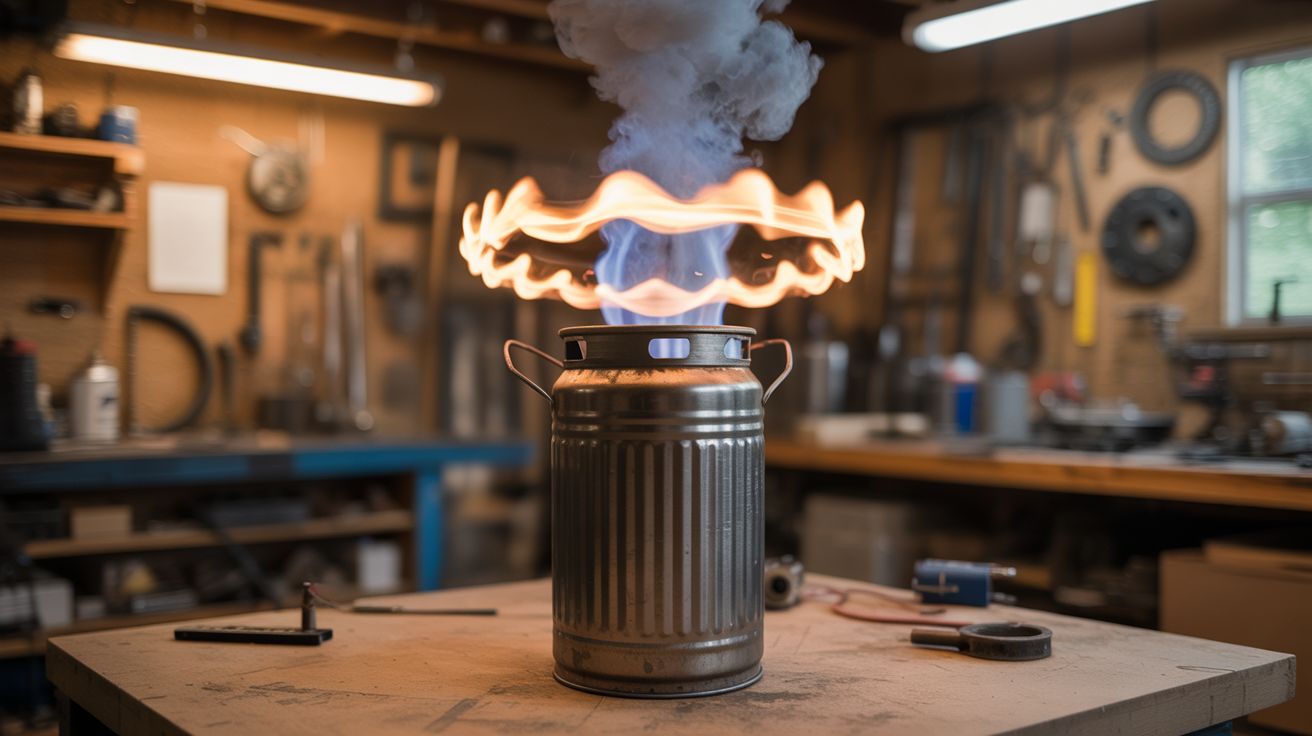
A trash can that shoots flaming vortex rings across the yard — part physics demo, part backyard artillery.
Ratings





🧪 What Is It?
A metal trash can with a hole cut in the bottom and a flexible membrane (rubber sheet) on the back. You fill it with propane, slap the membrane, and a toroidal vortex ring of gas shoots out of the hole. Light the gas as it exits and you get a self-sustaining ring of fire that flies 20+ feet through the air, spinning and holding its shape the whole way. It's the same physics as smoke rings, but on fire.
The vortex ring stays coherent because of angular momentum — the donut shape is stable and self-reinforcing. The propane burns on the surface of the ring as it travels, creating a hovering, flying ring of flame that looks like something out of a video game.
🧰 Ingredients
- Metal trash can, ~30 gallon (source: hardware store or already own one, ~$15-20)
- Rubber exercise band or shower curtain for the membrane (source: thrift store or dollar store, ~$3)
- Propane torch or propane tank with hose fitting (source: hardware store, ~$10)
- Bungee cords or hose clamps to secure the membrane (source: hardware store, ~$5)
- Tin snips or angle grinder for cutting the hole (source: borrow or own)
- Long-reach BBQ lighter (source: already own one or dollar store)
- Duct tape (source: around the house)
🔨 Build Steps
-
Cut the firing hole. Using tin snips or an angle grinder, cut a circular hole in the bottom of the trash can. The hole should be roughly 1/3 the diameter of the can — about 6-8 inches for a 30-gallon can. Smooth the edges so they don't tear the vortex apart as it exits. Deburr thoroughly.
-
Attach the membrane. Stretch the rubber sheet tightly across the open top of the trash can. Secure it with bungee cords or hose clamps wrapped around the rim. The membrane needs to be taut but still flexible enough to push inward 3-4 inches when you slap it. Test the fit by slapping it and feeling for a puff of air from the hole.
-
Test with smoke first. Before using propane, test vortex formation with smoke. Light a smoke bomb or incense inside the can, seal the membrane, and slap it. You should see a clean smoke ring shoot out 10-15 feet. If the ring breaks up immediately, your hole is too big or your membrane is too loose.
-
Add the propane fill port. Drill a small hole in the side of the can near the bottom (membrane end). Insert a short brass fitting or just poke the propane torch nozzle through. You need a way to fill the can with propane gas without it all leaking out before you fire.
-
Fill with propane. In an open outdoor area with no ignition sources nearby, open the propane valve and fill the can for 3-5 seconds. You don't need much — a small amount of propane mixed with the air in the can is ideal. Too much and it won't ignite properly (too rich). Too little and you just get a warm puff.
-
Position the ignition source. Have a helper hold a long-reach BBQ lighter about 6 inches in front of the firing hole, off to one side. Alternatively, tape the lighter in position so nobody's hand is in the firing path.
-
Fire. With the lighter lit and held near the exit hole, slap the membrane firmly with an open palm. The propane-air mixture will shoot out as a vortex ring, hit the flame, and ignite into a flying fire ring. A firm, quick slap produces the best rings — don't push, slap.
-
Tune and repeat. Experiment with propane fill amounts, membrane tension, hole size, and slap force. Tighter membranes and smaller holes produce faster, tighter rings that travel farther. More propane produces bigger flames but messier rings. Find the sweet spot.
⚠️ Safety Notes
Spicy Level 4 build. Read the Safety Guide and Chemical Safety, Fire & Pyro Safety, High Voltage Safety before starting.
[!CAUTION] Do this outdoors only, far from structures. The fire rings travel 20+ feet and can ignite dry grass, leaves, or anything flammable in their path. Have a garden hose ready. Do not fire toward buildings, cars, or people.
- Propane is heavier than air. If you overfill and it pools on the ground, a stray spark can ignite a ground-level flash. Fill in small amounts, and if you smell gas pooling, let it dissipate before attempting ignition. Do not use this in pits, basements, or low-lying enclosed areas where propane can silently accumulate to explosive levels.
- Disconnect the propane tank before firing. If the tank is still connected when you slap the membrane, a flashback through the fill port could follow the gas line back to the tank. Close the valve, remove the hose, and plug the fill hole before every shot.
- The membrane slap puts your hand near the device. Make sure the propane fill port is sealed before firing. A flashback into the can is unlikely but possible if the mixture is wrong — keep your face away from both ends.
🔗 See Also
- Fire Tornado Table — another way to make fire do impossible-looking things
- Rubens' Tube — propane used to visualize sound waves as fire