#097 — Absorption Fridge
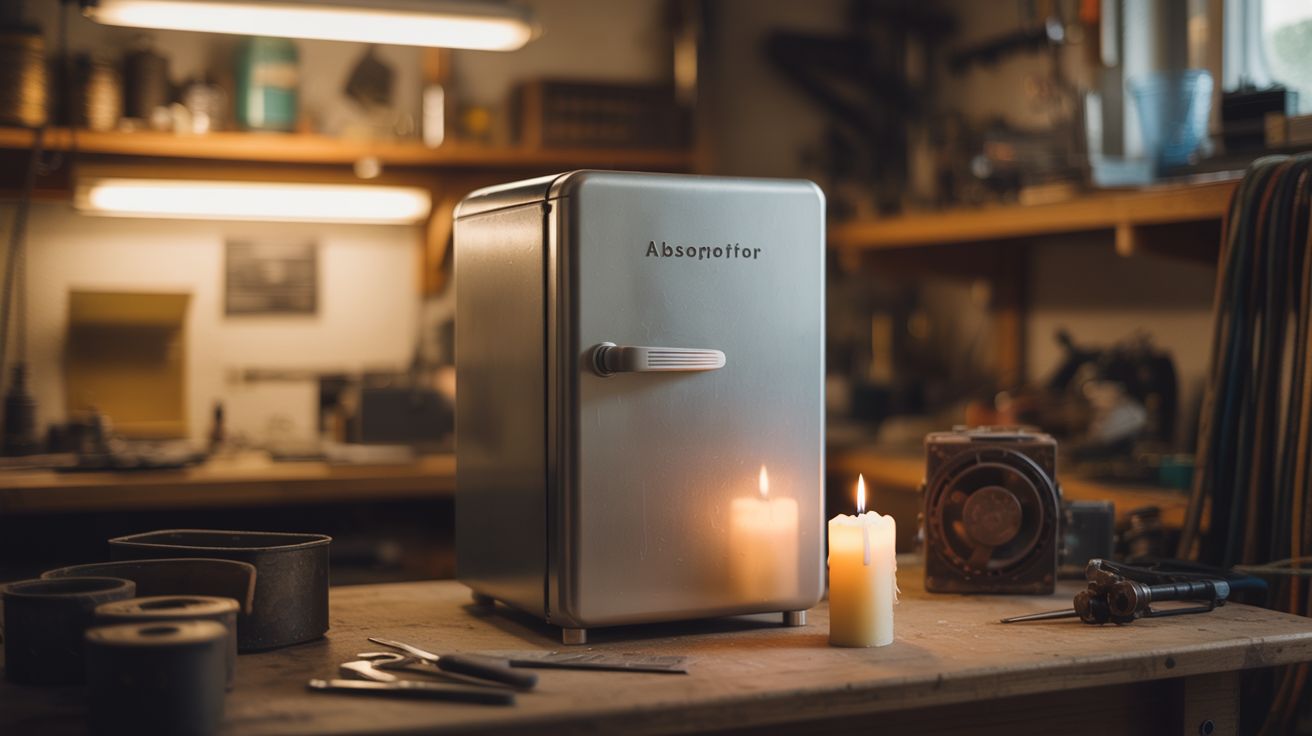
A fridge with zero moving parts — just heat, ammonia, and gravity. Runs off a candle.
Ratings




🧪 What Is It?
Absorption refrigeration uses heat to drive a cooling cycle — no compressor, no electricity, no moving parts. Ammonia evaporates, absorbs heat (making things cold), gets reabsorbed into water, then gets boiled out again by a heat source. RV fridges and old propane refrigerators use this exact cycle. Build one from scratch with steel tubing, ammonia solution, and a heat source (propane burner, candle, or even concentrated sunlight). A fridge powered by fire is a genuine mind-bender.
🧰 Ingredients
- Steel tubing — 1/4" to 3/8" (hardware store, plumbing supply)
- Ammonia solution — household ammonia 10% or stronger (hardware store, cleaning aisle)
- Hydrogen gas source — or use a three-fluid system with water (welding supply for hydrogen, or ammonia-water-hydrogen salvage from old RV fridge)
- Propane burner or alcohol lamp — heat source (camping store)
- Insulated box — styrofoam or build from rigid foam insulation (hardware store)
- Copper fittings, unions, and valves (plumbing supply)
- Solder and flux — silver solder for pressure-rated joints (hardware store)
- Pressure gauge (auto parts store)
🔨 Build Steps
- Study the Einstein-Szilard cycle. Yes, THAT Einstein. He co-patented an absorption fridge design. The three-fluid cycle (ammonia, water, hydrogen) has no moving parts and no high pressures. Understand the flow: generator → condenser → evaporator → absorber → back to generator.
- Build the generator. Coil steel tubing over the heat source. This is where ammonia-water solution gets heated, boiling off ammonia vapor. The vapor rises through the tubing to the condenser.
- Build the condenser. A length of finned tubing (or coiled tubing with a fan) that cools the ammonia vapor back into liquid. Air-cooled or water-cooled. Mount this outside the insulated box.
- Build the evaporator. Tubing inside the insulated box where liquid ammonia evaporates, absorbing heat from the box interior. This is where the cooling happens. Hydrogen gas (in a 3-fluid system) flows through here to lower the partial pressure of ammonia, enabling evaporation at low temperature.
- Build the absorber. Where ammonia vapor re-dissolves into water. The ammonia-rich water flows back to the generator by gravity, completing the cycle.
- Assemble and seal. Connect all sections with pressure-rated fittings. Silver solder all joints. This is a sealed system — any leak kills the cycle and releases ammonia (toxic).
- Charge the system. Add the ammonia-water solution and hydrogen (if using 3-fluid). Seal permanently. Use the pressure gauge to verify no leaks under operating temperature.
- Test with heat source. Light the burner under the generator. Within 30-60 minutes, the evaporator section should start getting cold. The system takes time to reach steady state. Expect 40-50°F inside the box.
⚠️ Safety Notes
Spicy Level 3 build. Read the Safety Guide before starting.
- Ammonia is toxic and corrosive. Work outdoors or in extremely well-ventilated areas. Wear chemical splash goggles and nitrile gloves. If you smell ammonia during operation, you have a leak — shut down and ventilate immediately.
- The system operates under modest pressure. Use properly rated tubing and silver solder (not soft solder). Pressure-test with air before charging with ammonia.
- Keep the heat source away from the ammonia side of the system. Ammonia is flammable in high concentrations.