#028 — Powder Coating Oven
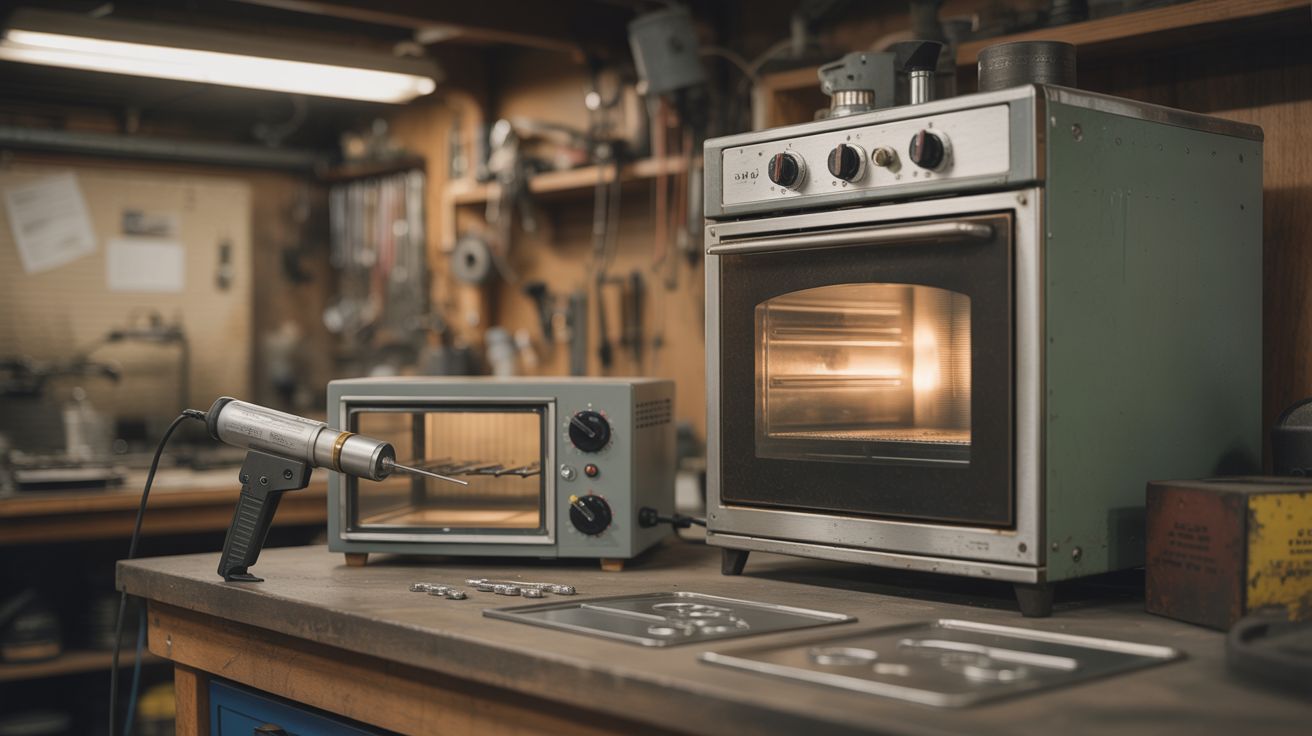
An old kitchen oven, a thrift-store toaster oven for small parts, and an electrostatic gun turn raw metal into factory-finish coated parts.
Ratings




🧪 What Is It?
Powder coating is how factories finish metal parts — a dry powder is electrostatically charged and sprayed onto a grounded metal part. The charged particles cling to the metal, and then the part goes into an oven at 350-450°F where the powder melts and flows into a hard, smooth, durable finish. It's tougher than paint, more even than spray cans, and comes in every color imaginable.
A professional powder coating setup costs thousands. But a discarded kitchen oven already hits the right temperatures. A cheap electrostatic powder gun costs $20-$60. And the powder itself is inexpensive. The result is a finish that looks and performs like it came from a professional shop.
🧰 Ingredients
- Kitchen oven — full-size, must reach 450°F reliably (curbside, appliance recycler, estate sale)
- Toaster oven — for small parts that don't justify heating the big oven (thrift store)
- Electrostatic powder coating gun — basic units are $20-$60 (online, harbor freight)
- Powder coat powder — polyester or epoxy-polyester hybrid, various colors (online supplier, $10-$20 per lb)
- High-temperature hooks and hanging wire — to suspend parts in the oven (hardware store)
- Oven thermometer — don't trust the oven's built-in dial (kitchen store, hardware store)
- Sandblaster or chemical degreaser — parts must be perfectly clean (hardware store)
- Compressed air source — for the powder gun (shop compressor, or see Silent Compressor)
- Grounding wire — alligator clip to the part, connected to the oven chassis ground (hardware store)
- Heat-resistant gloves (hardware store)
🔨 Build Steps
- Prepare the oven. Clean the kitchen oven thoroughly — any grease or food residue will outgas and contaminate your finish. Remove oven racks you don't need. Install hooks or a wire rack system for hanging parts. Do not use this oven for food again after powder coating in it — the powder releases fumes during curing.
- Set up a spray booth. You need an enclosed or semi-enclosed area to spray powder. A large cardboard box works for small parts. For larger work, hang plastic sheeting to contain overspray. Overspray powder can be swept up and reused — it's dry and non-toxic before curing.
- Prepare the parts. Powder coating requires bare, clean, grease-free metal. Sandblast or chemically strip any existing finish. Degrease with acetone or brake cleaner. Handle parts with clean gloves after degreasing — skin oil will cause adhesion failures and fish-eyes in the finish.
- Preheat the oven. Bring the oven to the temperature specified on your powder (typically 375-400°F). Use an independent oven thermometer to verify — kitchen ovens can be off by 25°F or more.
- Ground the part. Clip a grounding wire from the metal part to a known ground. The electrostatic gun gives the powder a positive charge, and it needs to be attracted to the grounded (negative) part. A bare metal clip directly on the part works — the clip mark won't be coated, so put it somewhere hidden.
- Spray the powder. Hold the gun 6-8 inches from the part and spray in smooth, even passes. The powder should cling immediately. Build up an even coat — too thin looks patchy, too thick runs and sags during curing. Faraday cage effect can make inside corners difficult; spray those areas first at a different angle.
- Cure the part. Hang the coated part in the preheated oven. The powder will melt and flow (called "gelling") within 5-10 minutes, then cure over 15-20 minutes at temperature. Total oven time is typically 20-30 minutes. Don't open the door to check — temperature drops cause orange peel texture.
- Cool and inspect. Remove the part and let it air cool. The finish should be smooth, even, and hard within minutes of cooling. If you see thin spots, you can recoat — scuff lightly with fine sandpaper, respray, and cure again.
⚠️ Safety Notes
- Never use a powder coating oven for food afterward. The curing process releases volatile organic compounds that embed in the oven walls. Dedicate the oven to powder coating permanently.
- Powder coat powder is finely ground plastic. Wear a dust mask or respirator while spraying. In high concentrations, airborne powder is an explosion hazard — work in a ventilated area away from open flames or sparks.
- The electrostatic gun generates high voltage (up to 100kV) at extremely low current. It's not dangerous in the way mains electricity is, but it will give you a static shock if you touch the charged tip. Keep the gun away from grounded metal when pulling the trigger.