#210 — Hand Sanitizer Fire Art
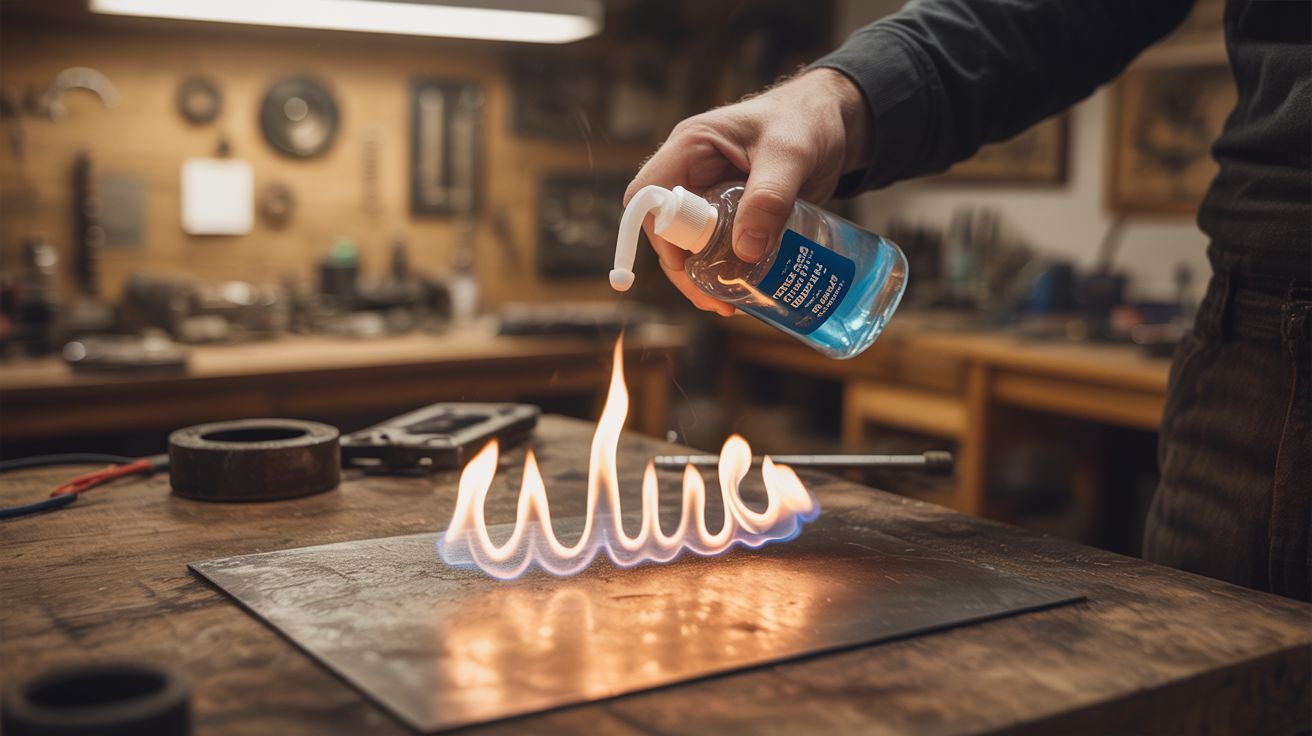
Hand sanitizer gel burns with a clean blue flame that barely radiates heat — squeeze patterns on a fireproof surface and write in fire.
Ratings





🧪 What Is It?
Hand sanitizer is 60-70% ethanol or isopropyl alcohol suspended in a gel matrix. When you ignite it, the alcohol burns with a pale blue flame that's barely visible in bright light but stunning in the dark. The gel keeps the fuel in place — it doesn't flow like liquid alcohol — so you can squeeze it into shapes, letters, spirals, and patterns on a fireproof surface and then light it up. The result is fire calligraphy: words and designs that burn for 30-60 seconds before the alcohol is consumed, leaving the surface cool and unscorched.
The low thermal output is the key feature. Alcohol burns at a relatively low temperature compared to hydrocarbon fuels, and the gel limits the burn rate further. You can pass your hand briefly through the flame without pain (don't hold it there). The combustion products are just CO2 and water — no smoke, no soot, no residue. When the fire goes out, the surface is dry and clean.
This is the build that goes viral. Fire writing in a dark room, filmed from above, is some of the most photogenic content you can create with $3 of materials.
🧰 Ingredients
- Hand sanitizer gel — standard 60-70% alcohol formulation, any brand (pharmacy or grocery, ~$3)
- Fireproof surface — ceramic tile, concrete slab, or a metal baking sheet (hardware store or kitchen, ~$2-$5)
- Long-reach lighter or matches (grocery or dollar store, ~$1)
- Squeeze bottle (optional) — for precise line work, transfer gel into a condiment squeeze bottle (dollar store, ~$1)
- Dark room or outdoor setting at night — the blue flames are invisible in daylight (free)
🔨 Build Steps
- Prepare the surface. Place a large ceramic tile, concrete paver, or metal baking sheet on a stable, level, non-flammable surface. Clear everything flammable within 3 feet — paper, fabric, curtains, alcohol containers. The surface must be completely dry. If outdoors, choose a windless night — even light wind distorts the flame patterns and can blow fire unpredictably.
- Test the gel. Squeeze a small dab (quarter-sized) of hand sanitizer onto the surface. Light it with a long-reach lighter. Observe the flame: it should be pale blue, steady, and burn for 20-40 seconds. If the gel contains added moisturizers or aloe, the flame may be slightly yellow or sputter — pure alcohol gel burns cleanest.
- Design your pattern. Plan what you'll write or draw before squeezing. Simple works best for your first attempt: a word, a name, a spiral, a star. The gel lines should be at least 1/4 inch wide to sustain flame. Thinner lines burn out too fast to light the full design before the starting point goes out.
- Squeeze the design. Apply the gel to the surface in your chosen pattern. Use a squeeze bottle for clean, even lines. Work quickly — the gel starts drying (alcohol evaporating) as soon as it's exposed. For large designs, work in sections and light each section before the gel dries.
- Ignite. Light one end of the gel pattern. The flame propagates along the gel line at walking speed. For simultaneous ignition of the entire design, work faster when applying the gel so it's all still wet when you light it, or use multiple ignition points.
- Photograph or film. The best shots are from directly above, shot in a completely dark room. Phone cameras handle the blue flame well on auto exposure. For video, lock the exposure so it doesn't auto-adjust as the flames grow and shrink. A time-lapse of the entire burn — ignition, full blaze, dying embers — compresses the 30-60 second event into a few seconds of mesmerizing footage.
⚠️ Safety Notes
Spicy Level 3 build. Read the Safety Guide and Chemical Safety, Fire & Pyro Safety before starting.
- The flame is real fire. It will ignite paper, fabric, hair, and anything flammable it contacts. Clear the area thoroughly. Have a damp towel within reach to smother any accidental spread. Keep the hand sanitizer container sealed and away from the active flames — the entire container can ignite if the flame reaches it.
- Blue alcohol flames are nearly invisible in bright light. People have been burned by "invisible fire" they couldn't see. Always work in dim conditions so the flame is visible, and never walk through an area where fire was burning until you're certain it's fully extinguished.
- Alcohol vapor is heavier than air and pools in low spots. Don't do this in a basement, pit, or poorly ventilated space. The vapors can travel along the ground and ignite from a distant source.
🔗 See Also
- Alcohol Vapor Cannon — another build exploiting alcohol combustion
- Colored Fire — different chemical approaches to colored flames