#211 — Acetone Styrofoam Sculptor
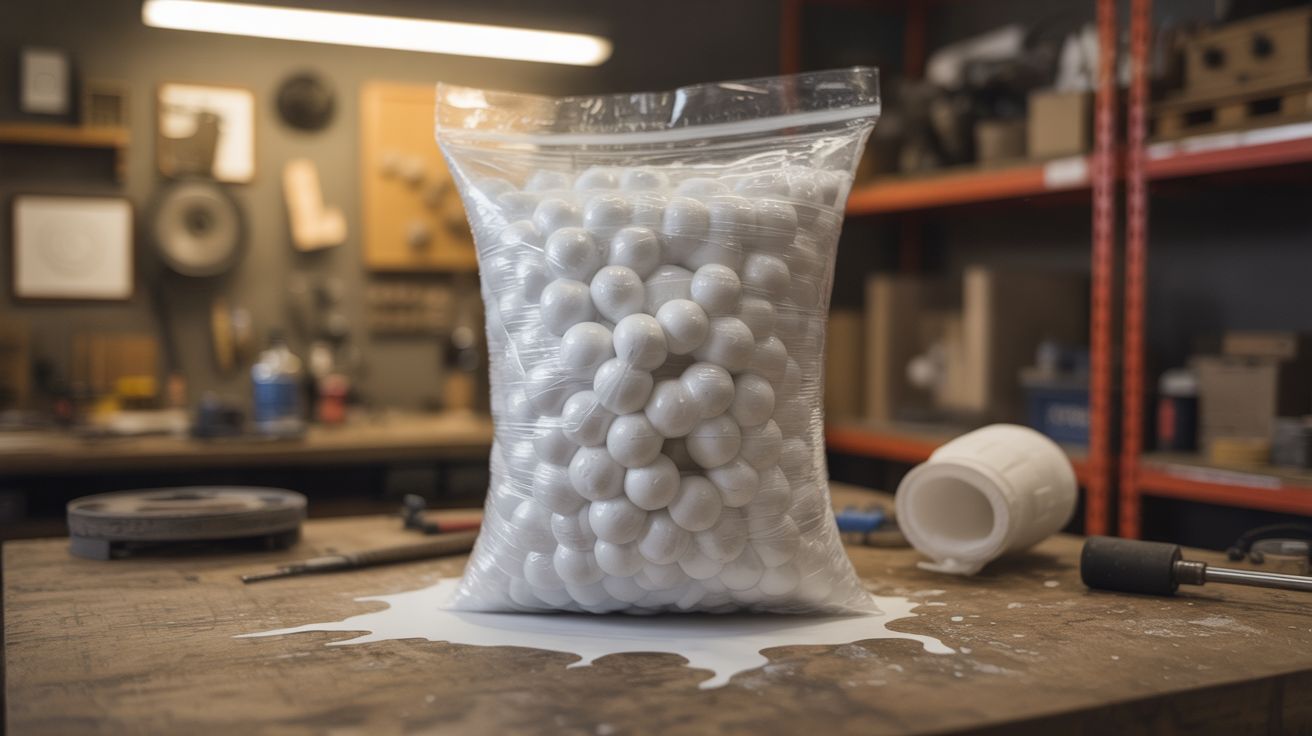
Acetone dissolves expanded polystyrene on contact, collapsing a trash bag of packing peanuts into a dense, moldable putty you can sculpt into anything.
Ratings



🧪 What Is It?
Expanded polystyrene (EPS) — the white foam used in packing peanuts, takeout containers, and shipping blocks — is 98% air by volume. The remaining 2% is polystyrene plastic. Acetone (the active ingredient in nail polish remover) is a powerful organic solvent that dissolves polystyrene instantly. When you drop a styrofoam block into acetone, it collapses like a deflating balloon as the solvent breaks down the foam structure and releases all that trapped air. A cubic foot of styrofoam reduces to a golf-ball-sized blob of gooey plastic.
That blob is moldable. While the acetone is still present, the polystyrene is a thick, putty-like mass that can be pressed into molds, shaped by hand, or sculpted with tools. As the acetone evaporates over 24-48 hours, the polystyrene hardens into a solid, dense plastic. The result is a free sculpting material made entirely from trash — packing peanuts that would otherwise sit in a landfill for centuries.
The visual effect of styrofoam dissolving in acetone is dramatic on its own — it looks like the foam is being eaten. The sculpting applications are a bonus.
🧰 Ingredients
- Acetone — 100% pure, not nail polish remover with additives (hardware store or beauty supply, ~$5 per quart)
- Expanded polystyrene (EPS) — packing peanuts, shipping blocks, takeout containers (source: free from packages, moving supplies, dumpsters)
- Glass or metal container — for dissolving (acetone melts most plastics) (kitchen or hardware store)
- Molds (optional) — silicone molds, cookie cutters, or shaped containers (craft store or kitchen)
- Nitrile gloves (pharmacy or hardware store)
- Sculpting tools (optional) — toothpicks, plastic knives, wooden skewers (around the house — free)
🔨 Build Steps
- Set up the workspace. Work outdoors or in a very well-ventilated area. Acetone vapor is flammable and can cause dizziness in enclosed spaces. Cover your work surface with aluminum foil — acetone dissolves or damages most painted surfaces, varnishes, and many plastics. Do not use a styrofoam, polycarbonate, or ABS container for the acetone.
- Pour the acetone. Add 1-2 cups of acetone to a glass or metal bowl. You need less than you think — the acetone is recycled as each batch of foam dissolves.
- Add the styrofoam. Break packing peanuts or foam blocks into smaller pieces and push them into the acetone. They dissolve almost instantly on contact, collapsing with a satisfying hiss as trapped air escapes. Keep adding foam — a surprising volume dissolves into a small amount of acetone. A full trash bag of packing peanuts can reduce to a fist-sized mass.
- Reach the right consistency. Keep adding foam until the mixture becomes a thick, putty-like paste. If it's too runny, add more foam. If it's too stiff to work, add a few drops of acetone. The ideal consistency is like modeling clay — firm enough to hold a shape but soft enough to sculpt.
- Sculpt or mold. Press the putty into silicone molds for precise shapes, or sculpt freeform with your hands (wear nitrile gloves — acetone dries skin and the dissolved plastic is sticky). For detailed work, use wooden sculpting tools or toothpicks. Work quickly — the surface starts to skin over as acetone evaporates.
- Dry and cure. Place the molded or sculpted pieces in a ventilated area to dry. Drying time depends on thickness: thin pieces (under 1/4 inch) cure in 12-24 hours, thicker pieces take 48-72 hours. The acetone must fully evaporate for the piece to reach maximum hardness. The finished product is dense, hard polystyrene — lighter than solid plastic but much denser than the original foam.
- Finish (optional). Once fully cured, the hardened polystyrene can be sanded, drilled, painted, or coated with epoxy for a smooth, glossy finish. It accepts spray paint and acrylic paint well.
⚠️ Safety Notes
- Acetone is highly flammable — vapor can ignite from sparks, pilot lights, or static discharge. No open flames anywhere near the workspace. Do not smoke. Keep the acetone container capped when not actively dissolving foam.
- Work in a ventilated area. Acetone vapor causes headaches, dizziness, and nausea with prolonged exposure. Outdoors is best. If indoors, use a fan blowing vapors away from you and open multiple windows.
- Wear nitrile gloves (not latex — acetone degrades latex). Acetone strips oils from skin, causing dryness and cracking. If it contacts skin, wash with soap and water and apply moisturizer.
🔗 See Also
- Density Tower — another build that exploits liquid-material interactions for visual effect
- Electroforming Art — coat your polystyrene sculptures in real copper