#239 — Steel Tongue Drum
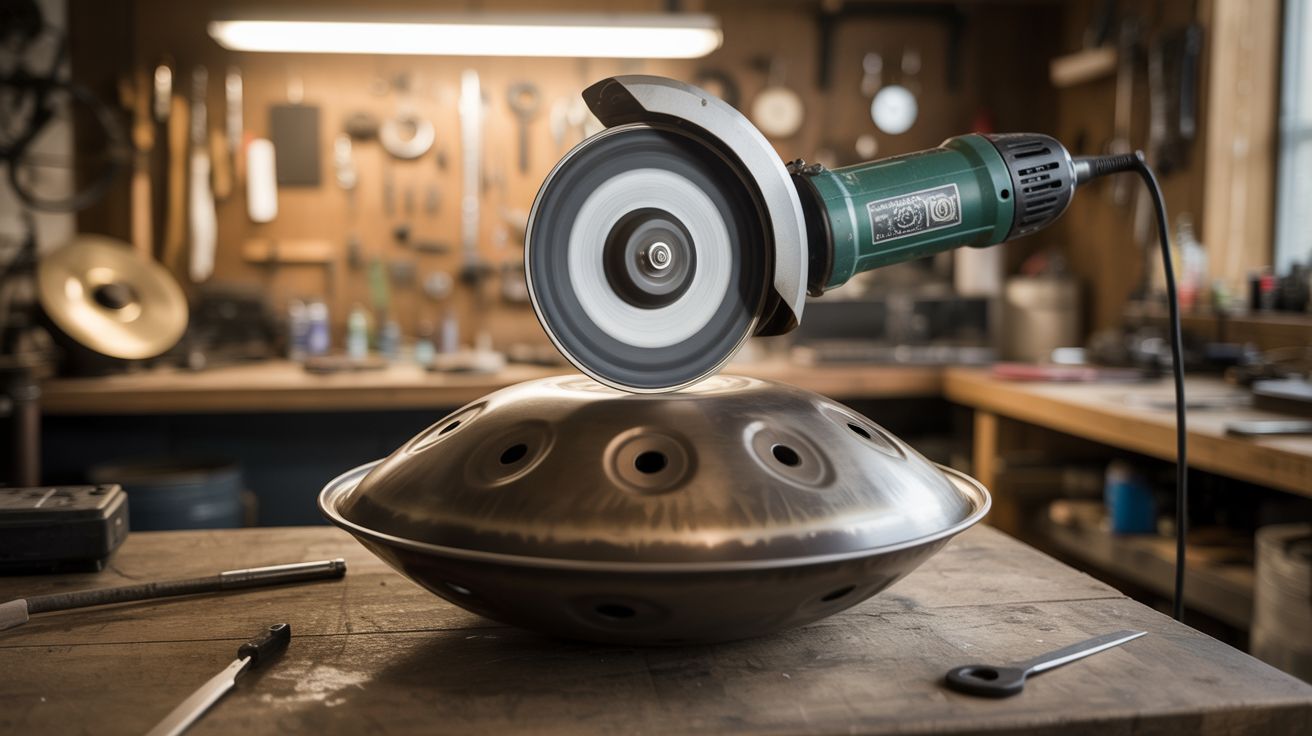
A washing machine drum lid and an angle grinder produce a $300 handpan sound for the price of a cutting disc.
Ratings






🧪 What Is It?
A steel tongue drum (also called a tank drum or hank drum) made by cutting tuned tongues into the lid or bottom of a steel container — typically a propane tank, but a washing machine drum lid, a large steel bowl, or any thick-gauge steel dome works. Each tongue vibrates at a specific pitch when struck, and the hollow body amplifies the sound into warm, bell-like, meditative tones.
Commercial steel tongue drums and handpans sell for $300-$2,000. The sound is hauntingly beautiful — rich harmonics, long sustain, and an almost otherworldly quality that makes people stop and listen. The secret is that you can get 90% of that sound from salvaged steel and an angle grinder. The tongues' pitch is determined by their length, width, and the thickness of the steel. Shorter and narrower = higher pitch. You cut them to calculated dimensions, fine-tune with a grinder, and suddenly you have an instrument that sounds like it cost hundreds.
The tuning process requires patience and a chromatic tuner, but no musical training. If you can use an angle grinder and read a tuner app, you can build this.
🧰 Ingredients
- Steel container — washing machine drum lid, old propane tank (MUST be completely purged), large steel mixing bowl, or steel wok (source: dead appliance, scrapyard, or thrift store, free-$10)
- Angle grinder with cutting discs and flap discs (source: workshop or harbor freight, $20 if buying new)
- Chromatic tuner app or clip-on tuner (source: phone app, free)
- Marker and ruler/compass for layout (source: junk drawer)
- Metal file set (source: hardware store, ~$8)
- Sandpaper, 120-400 grit (source: hardware store, ~$5)
- High-temp spray paint or clear coat (optional) (source: hardware store, ~$5)
- Rubber or silicone feet, 3-4 (source: hardware store, ~$3)
🔨 Build Steps
-
Source and clean the steel body. Find a domed or concave steel piece at least 10-12 inches in diameter. Washing machine inner drum lids are ideal — they're the right gauge (1-2mm), the right curvature, and free from dead washers. If using a propane tank, it MUST be completely emptied, filled with water, drained, and left open for days before cutting. Clean all grease and residue from the steel.
-
Plan the tongue layout. Mark the tongues on the steel surface. A typical layout has 7-9 tongues radiating from the center in a circular pattern, like flower petals. Each tongue is a rounded rectangle or U-shape. The center tongue is usually the lowest note (longest tongue, ~4-5 inches), with shorter tongues around the outside for higher notes. Use a pentatonic scale for a forgiving, always-harmonious sound — you can't play a wrong note in a pentatonic scale.
-
Calculate tongue dimensions. The pitch of each tongue depends on its length, width, and the steel thickness. Start with a reference: for 1.5mm steel, a tongue roughly 4.5" x 1.2" will produce approximately a D4. Shorter tongues go higher. You'll be fine-tuning later, so cut slightly longer than calculated — you can always shorten a tongue to raise the pitch, but you can't add steel back.
-
Cut the tongues. Using the angle grinder with a cutting disc, carefully cut along your marked lines. Each tongue is cut on three sides (two long sides and the curved end), leaving the fourth side attached as the hinge point where the tongue vibrates. Cut slowly and steadily — wobbling will make the kerf uneven and the tongue won't ring true. Wear full face protection.
-
Initial tuning. Strike each tongue with a rubber mallet or your fingertip and check the pitch with a chromatic tuner. Each tongue will likely be flat (too low) since you cut them long. Shorten tongues by grinding material off the free end to raise the pitch. Remove small amounts at a time — a few millimeters changes the pitch noticeably. Grinding the tongue thinner near the hinge lowers the pitch if you overshoot.
-
Fine-tune the harmonics. Each tongue produces a fundamental and overtones. Ideally the first overtone should be one octave above the fundamental. You can tune this by adjusting where you remove material — grinding near the tip raises the fundamental, grinding near the hinge lowers it and affects the overtone relationship. This is the most time-consuming step but makes the biggest difference in sound quality.
-
Smooth and finish. Once all tongues are tuned, use flap discs and sandpaper to smooth all cut edges. Round over any sharp corners — you'll be striking these with bare fingers. Sand the whole surface to a consistent finish. Apply high-temp clear coat or spray paint to prevent rust.
-
Add feet. Attach 3-4 rubber or silicone bumper feet to the bottom (the side opposite the tongues). The drum needs to float freely on its feet for maximum resonance — if the body contacts the table directly, the sound gets choked.
-
Play and enjoy. Strike the tongues near their tips with fingertips, rubber mallets, or chopsticks. Experiment with striking force — lighter touches bring out the bell-like sustain, while harder hits activate more overtones. Because you tuned to a pentatonic scale, everything you play sounds musical. Improvise freely.
⚠️ Safety Notes
[!WARNING] Angle grinder safety is critical. Wear a full face shield (not just safety glasses), hearing protection, leather gloves, and long sleeves. Cutting discs can shatter. Never remove the grinder guard. Clamp the workpiece securely — never hold it with your free hand.
- Propane tank warning. If using a propane tank, incomplete purging can cause explosion when sparks from cutting ignite residual gas. The tank MUST be completely empty, filled with water and drained multiple times, and left open to air for several days. If you smell any gas, stop immediately. Many builders recommend only using tanks from a professional who has certified them as purged.
- Sharp metal edges. Until sanded smooth, the cut tongues have razor-sharp edges. Don't play the drum until all edges are fully smoothed and rounded.
🔗 See Also
- Bucket Drum Kit — electronic percussion from even cheaper materials
- Thunder Drum — another percussion instrument from repurposed materials