#222 — Wiper Motor Rotisserie
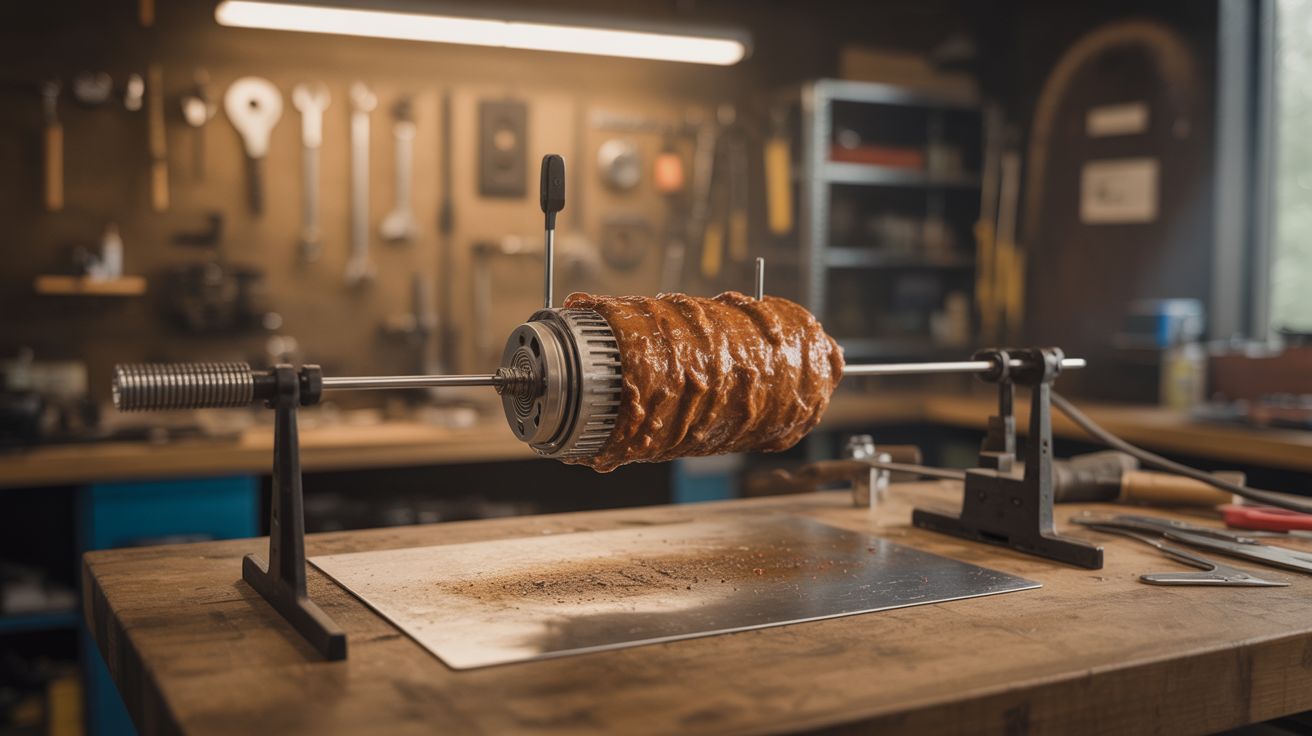
Wiper motor's worm-geared slow spin + a spit rod = the laziest, most effective BBQ rotisserie ever built.
Ratings



🧪 What Is It?
A windshield wiper motor is a DC motor with an internal worm gear reduction that converts high-speed motor rotation into slow, high-torque output — typically 40-65 RPM. That's almost exactly what you need for a rotisserie spit. Commercial rotisserie motors cost $30-80 and do the same thing worse, because wiper motors are overbuilt to survive years of rain, snow, and ice loads on a windshield. Wire a wiper motor to a 12V battery (or a 12V wall adapter), attach a spit rod to the output shaft, and you have a rotisserie motor that will turn a whole chicken for hours without complaint. The worm gear is self-locking, meaning the weight of the food can't backdrive the motor — it holds position even when power is cut. This is the easiest, most useful junkyard build in the entire repo.
🧰 Ingredients
- Windshield wiper motor — any vehicle (junkyard)
- 12V power source — car battery, 12V wall adapter (2A+), or bench power supply (existing or ~$10)
- Spit rod — 3/8" to 1/2" stainless steel rod, 24-36 inches long (hardware store)
- Spit forks — two-prong forks to hold the meat, or fabricate from stainless steel (BBQ supply or fabricate)
- Mounting bracket — L-bracket or angle iron to mount the motor to the grill (hardware store)
- Toggle switch — to start and stop (electronics supplier, ~$2)
- Wire — 16 AWG, a few feet (hardware store)
🔨 Build Steps
- Pull the wiper motor. At the junkyard, unbolt the wiper motor from the firewall. Cut the wiring harness with a few inches of wire still attached. There are usually three wires: ground, low speed, and high speed. You only need ground and low speed for a smooth, slow rotation.
- Test the motor. Connect 12V across the ground wire and the low-speed wire. The output shaft should turn slowly and steadily at about 40-50 RPM. If it's too fast, you can reduce the voltage with a simple voltage divider or PWM controller. Most wiper motors at 12V are already a perfect rotisserie speed.
- Adapt the output shaft. The wiper motor's output is a splined or knurled shaft with a threaded tip (designed to hold the wiper arm). You need to connect the spit rod to this shaft. Options: drill a hole through the spit rod end and bolt it to the wiper arm mount, use a coupling nut, or weld a socket adapter to the shaft. The connection must be solid — a 5-pound chicken creates real torque.
- Build the motor mount. Bend or weld an L-bracket from angle iron that bolts the motor to the side of your grill, smoker, or fire pit. The motor body should be outside the heat zone — wiper motors have plastic housings and internal grease that don't love sustained high temperatures. Keep the motor at least 12 inches from direct flame.
- Install the spit rod and forks. Slide the spit rod through the motor adapter, through the grill/smoker, and rest the far end on a bearing or V-bracket support. Install spit forks on the rod to hold the meat. Tighten the fork thumbscrews so the food is centered on the rod's axis — off-center loads wobble and stall the motor.
- Wire the switch. Install a toggle switch in-line with the positive wire between your 12V source and the motor. This lets you stop and start the rotation for loading and unloading food.
- Cook. Load the food, balance it on the spit, turn on the motor, and let it spin. A whole chicken takes about 90 minutes over medium coals. The constant rotation bastes the meat in its own juices and produces an insanely even cook. The wiper motor won't care — it was designed to run for hours in a blizzard.
⚠️ Safety Notes
- Keep the motor body and wiring away from direct flame and high heat. The motor housing is often plastic and the internal grease is petroleum-based. Mount the motor outside the cooking zone with the spit rod extending into the heat area.
- If using a car battery as the power source, keep it away from the grill — batteries vent hydrogen gas when charging, which is flammable. A 12V wall adapter is safer for stationary setups.