#223 — Spark Plug Cannon
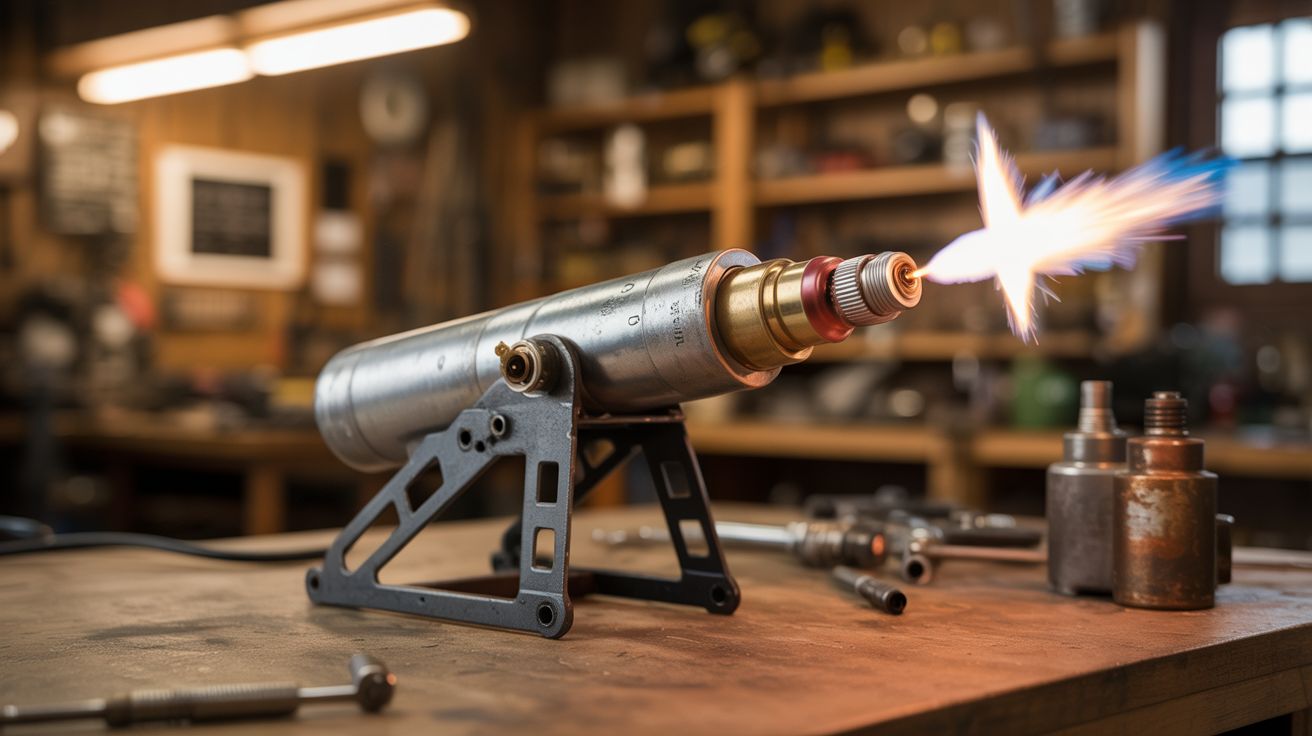
Spark plug + pipe combustion chamber + propane = a single-shot cannon that runs on the same principle as every internal combustion engine ever made.
Ratings



🧪 What Is It?
A spark plug is a precision ignition device designed to reliably fire a spark across a gap inside a high-pressure combustion chamber thousands of times per minute. It's the world's most trusted igniter, and it threads into a standard size hole. Screw one into the end of a capped steel or PVC pipe, fill the pipe with a propane/air mixture, and hit the spark plug with 12V through an ignition coil (or even a piezo igniter from a grill lighter). The fuel-air mixture detonates, and whatever is sitting in the barrel — a tennis ball, a potato, a wadded-up T-shirt — gets launched with a satisfying BANG. This is a combustion spud gun with a professional-grade ignition system. Unlike piezo igniters that sometimes fail, a spark plug fires every single time. One shot, reload, repeat.
🧰 Ingredients
- Spark plug — any standard size (14mm thread is most common) (junkyard, auto parts store)
- Steel or PVC pipe — 2-3 inch diameter, 2-4 feet long for the barrel (hardware store)
- End cap — threaded steel cap or PVC cap for the combustion chamber end (hardware store)
- Reducer coupling — to step down from the combustion chamber diameter to the barrel diameter (hardware store)
- Propane — from a small camping propane bottle with a trigger nozzle (hardware store)
- Ignition coil or piezo igniter — car ignition coil + battery, or salvaged grill lighter piezo (junkyard or junk drawer)
- Drill and tap — 14mm x 1.25 tap to thread the spark plug hole (tool store)
- Wire — for connecting igniter to spark plug (junk drawer)
- Projectiles — tennis balls, potatoes, foam balls (around the house)
🔨 Build Steps
- Build the combustion chamber. Use a large-diameter pipe (3-4 inches) about 8-12 inches long as the combustion chamber. Glue or thread a solid end cap on one end. This is where the fuel-air mixture lives and where the spark plug mounts.
- Drill and tap the spark plug hole. Drill a 12mm hole in the center of the end cap. Tap it with a 14mm x 1.25 thread tap (standard spark plug thread). Screw in the spark plug — it should thread in snugly and seal against the cap. If using PVC, you may need to use a steel bushing welded or epoxied into the cap, since PVC doesn't hold threads well.
- Attach the barrel. Connect a narrower pipe (1.5-2 inch diameter) to the combustion chamber using a reducer coupling. The barrel should be 2-4 feet long. A longer barrel gives more acceleration time and higher muzzle velocity. The projectile sits in the barrel, pushed from behind by the expanding combustion gases.
- Add a fuel injection port. Drill a small hole (1/4 inch) in the combustion chamber wall and install a short piece of tubing or a valve. This is where you inject propane. A quick 1-2 second squirt from a camping propane bottle is enough. Too much fuel and the mixture is too rich to ignite; too little and there's not enough energy for a good launch.
- Wire the igniter. If using a car ignition coil, wire the coil's primary to a 12V battery through a momentary switch. Connect the coil's high-voltage output to the spark plug terminal with ignition wire. If using a simpler piezo igniter, wire the piezo output directly to the spark plug terminal and ground the piezo to the combustion chamber body.
- Load a projectile. Stuff a tennis ball, potato, or foam ball into the barrel from the muzzle end. Push it down to where the barrel meets the combustion chamber. The projectile should be a snug fit — too loose and gas escapes around it, too tight and you risk a pressure failure.
- Inject fuel. Squirt propane into the combustion chamber through the injection port. A 1-2 second blast is usually right. The ideal fuel-air ratio for propane is about 4% by volume — you want the chamber mostly air with just enough propane to burn.
- Fire. Point the barrel in a safe direction (up or toward an open field, never toward people or structures). Press the igniter button. The spark plug fires, the propane-air mixture detonates, and the projectile launches with a loud bang. Tennis balls fly 100-200 feet easily.
⚠️ Safety Notes
Spicy Level 4 build. Read the Safety Guide before starting.
- This is a combustion device that generates significant pressure. Never use sealed barrels, PVC rated below Schedule 40, or metal pipes with visible corrosion or cracks. If the combustion chamber fails, it fragments into shrapnel. Inspect before every use.
- Never look down the barrel after a misfire. Wait 30 seconds, ventilate the chamber by blowing air through it, then re-inject fuel and try again. Propane is heavier than air and can pool in the chamber.
- Only use soft projectiles (tennis balls, potatoes, foam). Hard or sharp projectiles turn this into a weapon. Even soft projectiles can injure at close range. Never aim at people, animals, or property.