#090 — Electric Winch
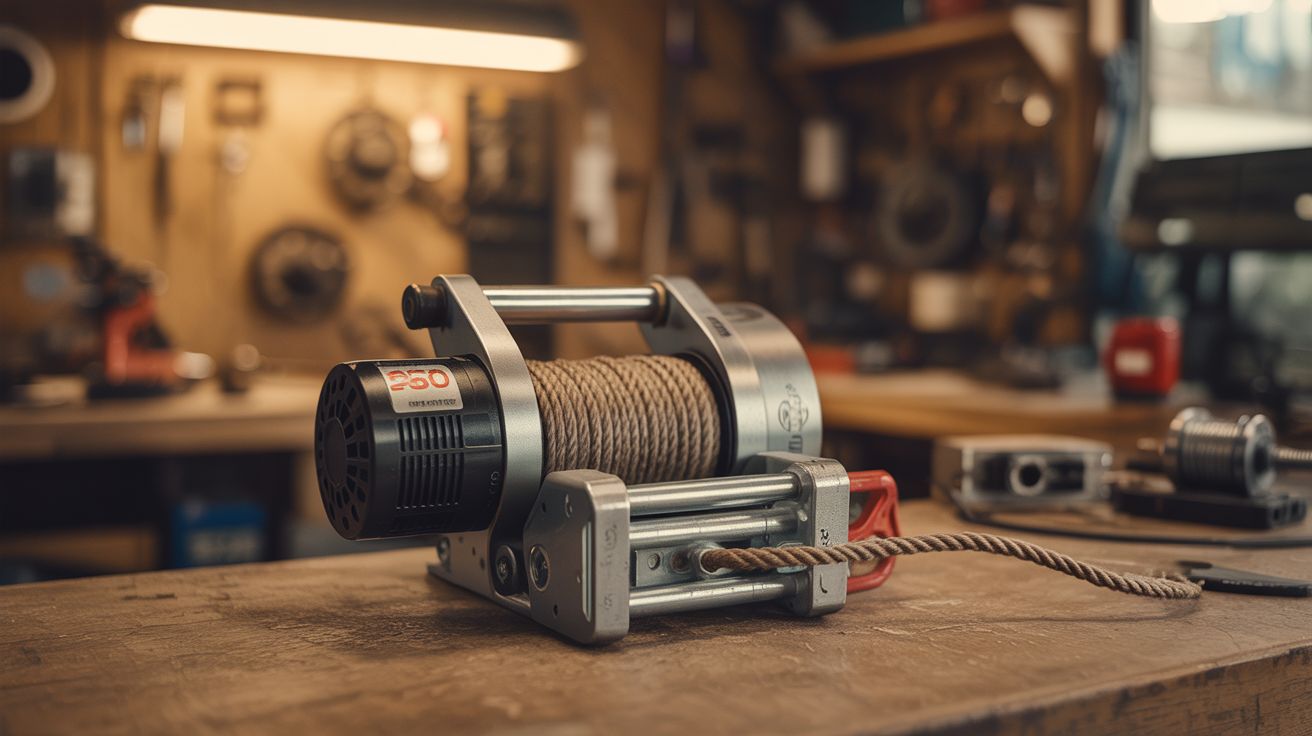
Scooter motor + spool + rope. A 250W motor lifts ~50 lbs. Portable electric winch for pulling, lifting, and hauling.
Ratings


🧪 What Is It?
A winch is a motor connected to a spool that winds rope or cable. Electric scooter motors are geared for torque (they need to move a person up hills), making them ideal winch motors. Connect the motor to a spool, wrap it with rope, add a mounting bracket, and you have a portable electric winch capable of pulling or lifting 50-100+ lbs depending on the motor size. Use it for hauling gear into a treehouse, pulling a stuck car, lifting materials to a roof, dragging logs, or any task where you need to pull something with more force than your arms provide. Commercial electric winches cost $80-300. This one costs scrap parts and an afternoon.
🧰 Ingredients
- Electric scooter motor — geared motors provide more torque than hub motors (dead scooter)
- ESC or motor controller — to control speed and direction (salvage from scooter, or ~$10)
- Spool/drum — thick PVC pipe coupling, wooden disc, or metal cylinder (hardware store or workshop)
- Rope or cable — rated for your intended load (paracord for light loads, steel cable for heavy) (hardware store)
- Battery pack — scooter battery or salvaged 18650 pack (dead scooter or laptop batteries)
- Steel plate or thick plywood — for mounting bracket and base (hardware store)
- Bolts, nuts, bearings (hardware store)
- Switch or remote control — for operation (electronics supplier or salvage)
🔨 Build Steps
- Select the motor. Geared scooter motors are best for winch duty — they trade speed for torque, which is exactly what you want. A 250W geared motor provides roughly 50 lbs of pulling force at the spool. Larger 350W-500W motors pull proportionally more.
- Build the spool. The spool must attach to the motor shaft and hold enough rope for your needs. Use a PVC pipe coupling (4-6 inch diameter) with plywood end flanges screwed on to keep the rope from sliding off. Drill a center hole matching the motor shaft diameter. Secure the spool to the shaft with a set screw or keyway.
- Build the frame. Mount the motor and spool on a sturdy base plate (1/4" steel plate for heavy loads, 3/4" plywood for lighter duty). The motor must be firmly bolted down — the torque reaction force tries to spin the motor body instead of the spool. Add mounting holes or a clamp system so you can secure the winch to a tree, vehicle hitch, or workbench.
- Install a shaft bearing. Support the far end of the spool shaft with a bearing mounted to the frame. This prevents the shaft from wobbling under load and reduces stress on the motor bearings.
- Wind the rope. Thread the rope through a small hole in the spool drum and tie a secure knot. Wind the rope evenly onto the spool by hand. Leave enough free rope for your working distance. Attach a hook, carabiner, or loop at the free end.
- Wire the controller. Connect the motor to the ESC or motor controller. Connect the controller to the battery pack. Wire a switch for power and direction control (forward to wind/pull, reverse to release). If using the scooter's original ESC and throttle, the throttle controls speed — very useful for precise positioning.
- Add a mounting system. Bolt a cleat, clamp, or carabiner bracket to the base plate so you can anchor the winch to a solid attachment point. The anchor point must withstand the full pulling force — the winch is only as strong as what it's bolted to.
- Load test. Start with a light load (10-20 lbs) and verify the motor, spool, rope, and anchor all perform correctly. Gradually increase the load to your target. Listen for motor strain (slowing, overheating) — that's your practical limit. Never exceed 80% of the motor's stall torque.
⚠️ Safety Notes
- Ropes and cables under tension store enormous energy. If a rope breaks or an anchor point fails, the rope snaps back violently and can cause severe injury. Never stand in the line of a loaded rope. Use rope rated for at least 3x your maximum load (safety factor of 3).
- Never put your fingers near the spool while the motor is running. A winch spool can crush or amputate fingers in an instant. Use a dead-man switch (winch only runs while you hold the button) so it stops immediately when released.
- The motor draws high current under load, generating heat. Monitor motor temperature during heavy pulls. Let it cool between lifts. Continuous high-load operation can burn out motor windings.