#013 — Aeolian Wind Harp
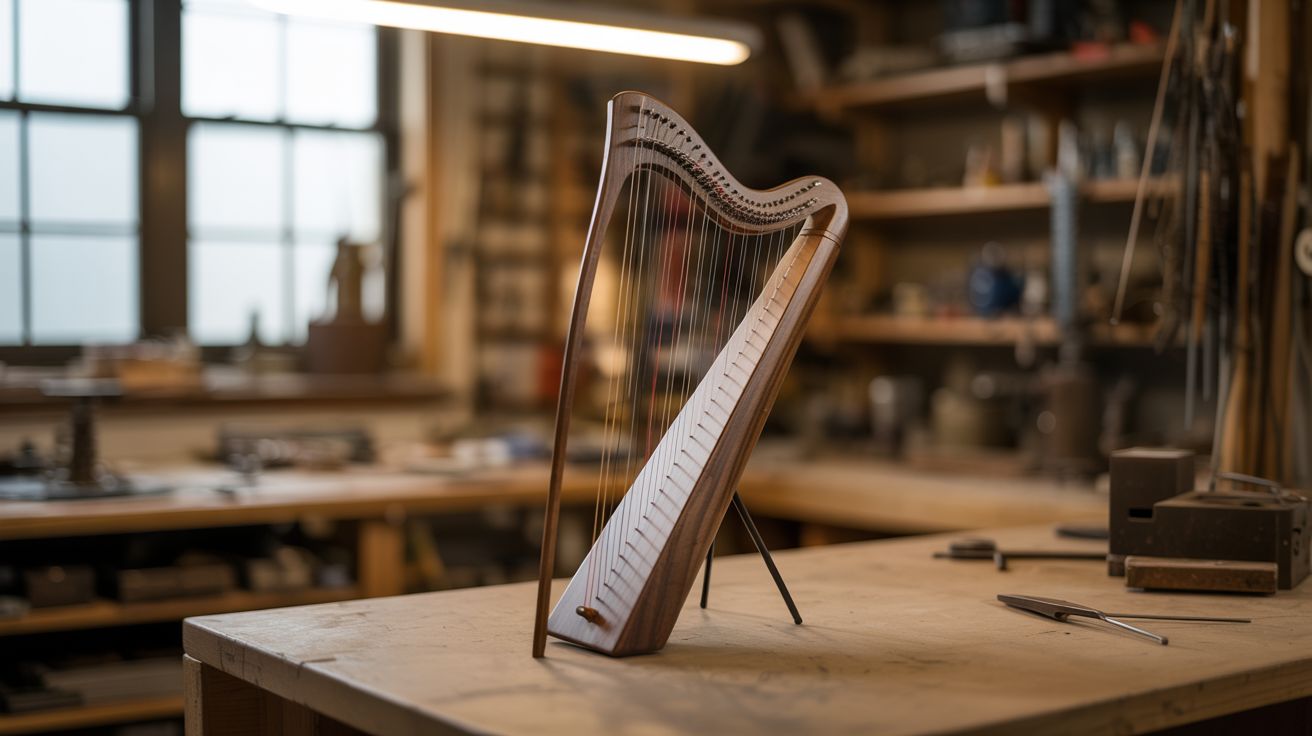
Strings tuned to resonate with the wind — place it outside and it plays haunting chords entirely on its own.
Ratings



🧪 What Is It?
An Aeolian harp is a stringed instrument played by the wind. Multiple strings of different thicknesses are stretched between two points on a soundboard, tuned to the same pitch but with different gauges. When wind blows across them, each string vibrates at its natural harmonics — not the fundamental pitch, but the overtones. Different wind speeds excite different harmonics, so the harp produces eerie, shifting chords that change constantly with the breeze.
Named after Aeolus, the Greek god of wind, these instruments date back thousands of years. The sound is genuinely otherworldly — sustained, evolving harmonics that sound like a choir of ghosts. Place one in a window or on a rooftop and it will serenade you whenever the wind blows.
🧰 Ingredients
- Wooden board or box for the soundboard, ~24-36 inches long (source: scrap wood, an old drawer, or a wooden wine box, free)
- Two wooden bridges, ~1 inch tall (source: cut from scrap wood dowel, free)
- Monofilament fishing line or guitar strings in various gauges (source: fishing supply or music store, ~$3-8)
- Small eye screws or tuning pegs (source: hardware store or salvaged from old guitar, ~$3)
- Wood glue (source: hardware store, ~$3)
- Sandpaper (source: hardware store, ~$2)
🔨 Build Steps
-
Build or find the soundboard. A hollow wooden box works best — a cigar box, wine box, or drawer bottom glued into a frame. The soundboard amplifies the string vibrations. If you're starting from a flat board, attach it over a shallow enclosed air space (even propping it up over a baking sheet with spacers works as a crude resonating chamber).
-
Install the bridges. Glue and/or screw two thin wooden strips (bridges) across the width of the soundboard, about 20-30 inches apart. These elevate the strings above the board surface and transfer vibration into the soundboard. The bridge height should be about 3/4 to 1 inch — enough for wind to flow under the strings.
-
Install tuning pegs. Put small eye screws or guitar tuning pegs at each end of the soundboard, one pair per string. You'll want 4-8 strings. Space them evenly across the width of the bridges.
-
String the harp. Stretch strings of different gauges between each pair of pegs, over the bridges. The key is to use different thicknesses of the same material — all tuned to the same fundamental pitch. Different diameters will excite different harmonics in the wind, creating rich chords. Tune all strings to roughly the same pitch (the exact pitch matters less than having them all match).
-
Tension the strings. Wind plays strings at very low force, so the tension doesn't need to be as high as a guitar. Moderate tension works best — tight enough to ring clearly when plucked, but not guitar-string-tight. Lower tension makes the harp more responsive to light breezes.
-
Find the right placement. Position the harp perpendicular to the prevailing wind direction. A window sill is classic — open the window so wind flows across the strings. Rooftop edges, fence tops, and gaps between buildings where wind accelerates also work well.
-
Listen and tune. Wait for wind and listen. You should hear sustained, shimmering tones that shift with wind speed. If the sound is thin or weak, try adjusting string tension, moving to a windier location, or adding more strings. The harp gets louder and more complex with more strings.
-
Weather protection. If leaving the harp outdoors, apply a coat of polyurethane or outdoor wood sealer to the soundboard. Use nylon strings (fishing line) rather than steel to avoid rust. Bring it indoors during heavy rain.
⚠️ Safety Notes
[!WARNING] Secure it against high winds. A strong gust can blow a lightweight harp off a window sill or fence. Secure it with clamps, screws, or tie-downs. A harp falling from height can damage property or injure someone below.
- String tension stores energy. When stringing or adjusting, a string can snap and whip. Wear eye protection when adjusting tension, and never put your face directly over a string being tightened.
🔗 See Also
- Thunder Drum — another instrument that produces sounds from natural/ambient forces
- Fire Tornado Table — another project that harnesses natural forces for dramatic effect