#075 — Vacuum Hovercraft
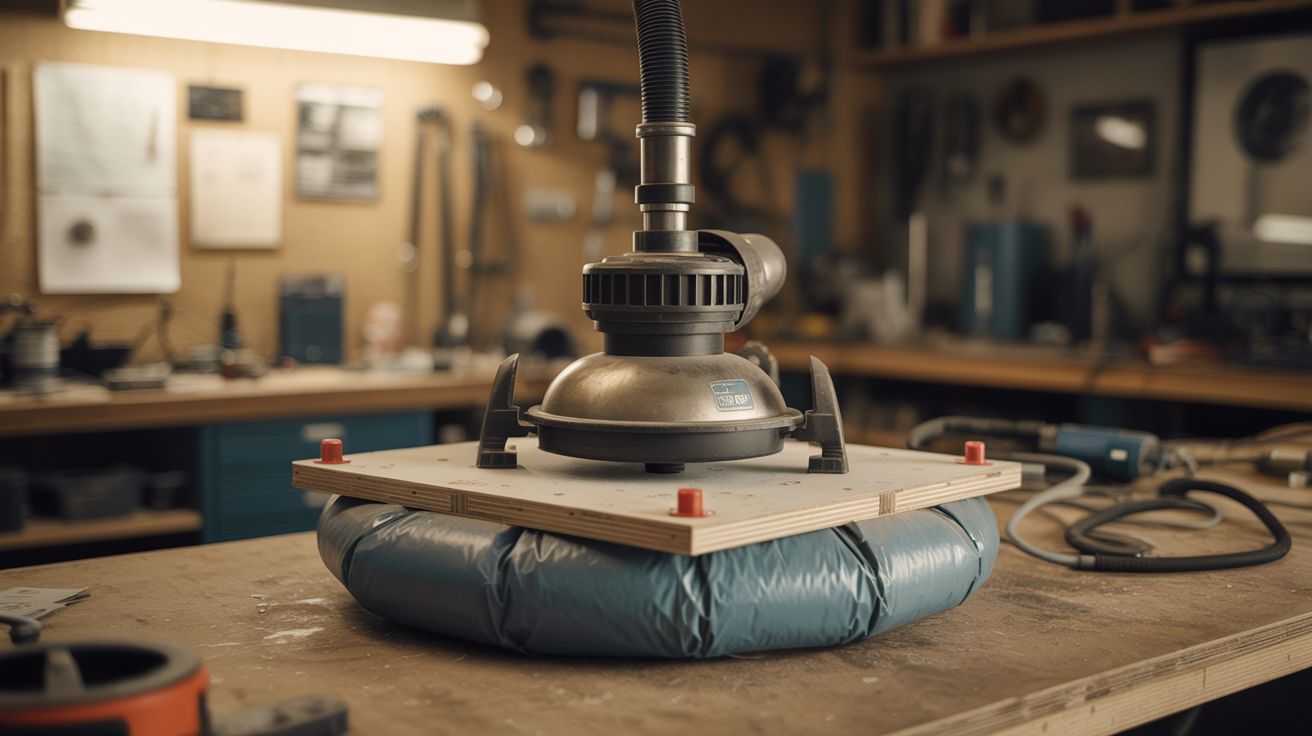
Reverse a vacuum motor to blow downward through a plywood platform. Add a trash bag skirt. It floats. Actually floats.
Ratings





🧪 What Is It?
A hovercraft works by trapping a cushion of high-pressure air under a platform. The air continuously escapes around the edges, but if you pump in more air than leaks out, the platform lifts off the ground and rides on a nearly frictionless air film. A vacuum cleaner motor is the perfect air pump for a personal-sized hovercraft — it moves 50-100 CFM of air at 1000+ watts. Mount the motor in the center of a circular plywood disc, blow air downward through a hole, contain it with a flexible skirt (trash bags work great), and the platform lifts a person. Add a leaf blower mounted horizontally for propulsion and you have a vehicle that glides over flat surfaces, water, grass, and ice.
🧰 Ingredients
- Vacuum cleaner motor — upright or canister, 1000W+ (dead vacuum)
- Circular plywood disc — 4 feet diameter, 3/4" thick (hardware store, ~$15)
- Heavy-duty trash bags — for the skirt (dollar store)
- Duct tape — lots of it (hardware store)
- Extension cord — heavy gauge for the motor draw (hardware store)
- Jigsaw — for cutting the plywood circle (workshop)
- Optional: leaf blower — for forward propulsion (thrift store or dead unit's motor)
- Optional: battery + inverter — for cordless operation (auto parts store)
🔨 Build Steps
- Cut the platform. Draw a 4-foot diameter circle on 3/4" plywood. Cut it out with a jigsaw. Sand the edges smooth. The platform needs to be stiff — if it flexes, the air cushion collapses. Use a thicker plywood or add a cross-brace underneath if it's floppy.
- Cut the air intake hole. Cut a 6-inch diameter hole in the center of the platform. This is where the vacuum motor blows air downward into the skirt chamber.
- Mount the vacuum motor. Secure the vacuum motor on top of the platform, centered over the hole, with the exhaust (blow) side pointing down through the hole. Use brackets, screws, or a plywood motor mount. The motor should be firmly attached — it vibrates at high RPM.
- Build the skirt. Cut open heavy-duty trash bags and duct-tape them around the bottom edge of the platform, creating a flexible wall about 4-6 inches deep. The skirt should form a complete seal around the perimeter. Overlap the bag sections generously and tape both inside and outside.
- Add vent holes to the skirt. Cut 6-8 small holes (about 1 inch each) in the bottom inner surface of the skirt, evenly spaced around the perimeter. Air escapes downward through these holes, creating the air cushion. Without vent holes, the skirt just balloons out and the craft tips over.
- Wire the motor. Connect the vacuum motor to a switch and extension cord. Use a heavy-gauge cord rated for the motor's amperage (typically 10-12 amps). Mount the switch where the rider can reach it.
- Test hover. Power on the motor. The skirt should inflate and the platform should lift 1-2 inches off the ground. Push the platform gently — it should glide with almost no friction. If one side drags, adjust the vent holes for even air distribution.
- Add propulsion (optional). Mount a leaf blower horizontally on the back of the platform, pointing backward. This pushes the hovercraft forward. Use a separate switch. For steering, mount the blower on a pivot so you can angle the thrust left or right.
- Test ride. Sit or stand on the platform (stand near the center for stability). Power on the lift motor. The platform should still hover with your weight. Push off a wall or use the leaf blower for propulsion. Start on smooth, flat surfaces — garages, basketball courts, or calm water.
- Iterate. If the hover is marginal, the motor isn't moving enough air or the skirt is leaking. Seal tape joints, reduce vent hole sizes, or add a second vacuum motor. Lighter riders hover more easily — this is physics, not a judgment.
⚠️ Safety Notes
- The hovercraft has no brakes. It rides on a nearly frictionless air cushion, so stopping requires friction from turning off the motor and letting the skirt drag, or bumping into something. Start in open areas away from obstacles, walls, water edges, and drops.
- The vacuum motor draws high current (10-12 amps). Use a properly rated extension cord and GFCI outlet. If operating near water, a GFCI is mandatory — electrocution risk is real.
- Hovercrafts on water are not boats. They have no buoyancy when the motor stops. Do not hover over water deeper than you can stand in, and always wear a life jacket.