#199 — Lenz's Law Slow-Mo Magnet
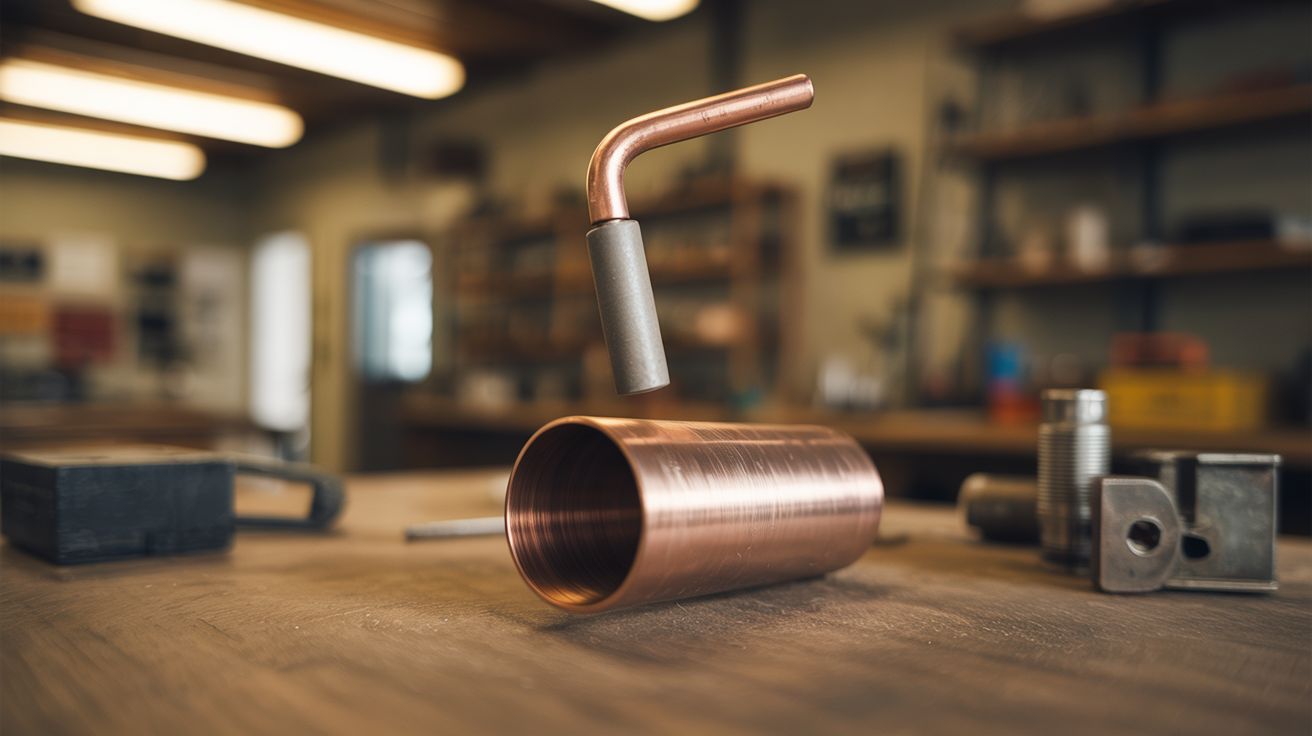
A magnet falls through a copper pipe in dreamlike slow motion — no strings, no tricks, just electromagnetic braking.
Ratings





🧪 What Is It?
Lenz's Law states that an induced current flows in a direction that opposes the change that caused it. When a strong neodymium magnet falls through a copper pipe, its changing magnetic flux induces eddy currents in the copper. Those currents create their own magnetic field that pushes back against the falling magnet, slowing it to a fraction of its normal free-fall speed. The magnet floats down the pipe like it's moving through honey.
This is the same physics as the Eddy Current Brake (#186), but explored as a standalone weird science demo with deeper experiments. The magnet never touches the pipe. There's no friction. Copper isn't magnetic. Yet gravity seems to have been dialed down to near zero. It's the kind of thing that makes people question reality until you explain the physics — and then it's even cooler.
🧰 Ingredients
- Neodymium cylinder or disc magnets, sized to fit inside the pipe with 2-3mm clearance (source: Amazon or hard drive magnets — $5-10)
- Thick-walled copper pipe, 3-4 feet long, 3/4" or 1" inner diameter (source: plumbing supply, scrap yard — $10-25)
- Thin-walled copper pipe of same diameter (optional, for comparison) (source: same sources)
- Aluminum pipe of same diameter (optional, for comparison) (source: hardware store or scrap)
- PVC pipe of same diameter (control — no braking) (source: hardware store — $3)
- Non-magnetic metal slug of similar weight to the magnet (brass or copper) (source: hardware store or machine shop)
- Stopwatch or phone timer (source: your phone)
- Thermometer or IR temperature gun (for temperature experiments) (source: kitchen or hardware store)
- Stand or clamp to hold pipes vertically (source: lab stand or build from scrap wood)
🔨 Build Steps
-
Set up the comparison pipes. Mount three or four pipes vertically side by side on a wooden stand or clamp: thick copper, thin copper (if available), aluminum, and PVC. All should be the same length. This side-by-side comparison is the best possible demonstration — drop the same magnet through each and the difference is jaw-dropping.
-
The basic demo. Drop the neodymium magnet into the thick copper pipe. Time its descent. Then drop a non-magnetic slug of similar weight through the same pipe — it falls normally. The magnet takes 5-15x longer depending on pipe wall thickness and magnet strength. People will ask you to do it again. And again.
-
The material comparison. Drop the magnet through each pipe type. PVC: normal speed (non-conductive, no eddy currents). Aluminum: slower than PVC but faster than copper (aluminum has ~60% of copper's conductivity). Thick copper: slowest. This demonstrates that braking force scales with material conductivity.
-
The wall thickness test. If you have both thick-wall and thin-wall copper pipes, compare them. Thicker walls = more copper for eddy currents to flow through = stronger braking. This is a great way to show that it's the volume of conductor, not just the presence of it, that matters.
-
The temperature experiment. Cool the thick copper pipe in a freezer for 1-2 hours. Drop the magnet again and time it. Cold copper has lower electrical resistance, which means stronger eddy currents and even more braking. The difference between room temp and freezer-cold copper is measurable and dramatic. Then try warming the pipe (not too hot — just warm water bath) and demonstrate the opposite.
-
The stacked magnet experiment. Drop a single magnet, then a stack of 2, then 3. More magnets = stronger field = more eddy currents = even slower fall. But the weight also increases, which works against the braking. There's an optimal number of magnets for the slowest descent — find it experimentally.
-
The energy question. The kinetic energy the magnet "should" have from free fall is being converted to electrical energy in the eddy currents, which dissipates as heat in the copper. After several rapid drops, feel the pipe — it will be detectably warmer. Use an IR thermometer to quantify it. Conservation of energy, confirmed in your hands.
-
Build a presentation stand. For science fair or demo purposes, build a polished stand that holds all the comparison pipes with clear labels. Add a printed card explaining Lenz's Law, Faraday's Law, and eddy currents. Include a magnifying glass so viewers can confirm the magnet never touches the pipe walls.
⚠️ Safety Notes
[!WARNING] Strong neodymium magnets are a pinch hazard. Two magnets snapping together, or a magnet snapping to a steel surface, can crush skin, bruise fingers, and crack the magnet itself (sending sharp fragments flying). Handle one magnet at a time and keep extras in separate containers.
- Keep magnets away from electronics. Neodymium magnets can wipe magnetic storage media, damage screens, and interfere with pacemakers. Maintain a 3-foot buffer from laptops, phones, credit cards, and anyone with medical implants.
🔗 See Also
- Eddy Current Brake — the same physics in the Mechanical & Kinetic category
- Homopolar Motor — another demonstration of the intimate relationship between current and magnetic fields